

Hill reps and big-gear cycling aren’t strength training

Many runners and cyclists assume hill reps or big-gear, low-cadence cycling sessions count as strength training because they feel hard on the legs. But perceived effort is not the same as mechanical loading. True strength development requires progressive external resistance that raises your force ceiling, reducing how much effort each stride or pedal stroke requires. In this article, Emma O’Toole explains why hills and high-torque cycling develop muscular endurance rather than maximal strength, how structured strength training improves performance and injury resilience, and why combining both produces better long-term results for endurance athletes.
Strength training for runners and cyclists over 30 is a game-changer for performance, resilience, and long-term health.
If you want the full breakdown, check out my Strength Training Over 30 Guides:
TRAINING BREAKDOWN
"Hills and high-torque cycling touch the ceiling. Strength training raises it."
By Emma O'Toole
Hi there!
Last week, I was speaking with one of the runners in the community about their weekly training.
She has been consistent with her training, doing regular long runs and workouts, one of which was weekly hill reps.
When I asked about strength training, she said: “I don’t really need gym work. My coach said hills cover that.”
And unfortunately, I hear this all the time from runners when it comes to hills and a cyclist’s version of strength training is high-torque, low cadence intervals on the bike.
Both hill reps and high-torque, low cadence intervals are tough. They make your legs burn and feel like you’re getting stronger, so it’s easy to assume they tick the strength box. For years, this was the narrative pushed in endurance sports, even though the best of the very best knew the benefits of strength training long before it’s gained such traction in today’s mainstream endurance world.
Now hill running, be that sprints, intervals or hillier terrain is excellent training; as are high-torque, low cadence intervals. They build muscular endurance, a strength quality you are developing every time you lace up your trainers and clip into your cleats.
However neither hill training nor high-torque low cadence training replace structured progressive strength training. When we treat them as if they do, we leave a lot of performance and injury resilience on the table.
Why hills and high-torque, low cadence work feels like strength training
Running uphill increases the force demand per stride. Riding at 60rpm in a big gear increases the torque through each pedal stroke.
It feels harder on the legs, it’s taking a lot of effort to power yourself up a hill or complete each revolution of the pedal stroke. That feeling though is not the same thing as building strength that will translate to improved performance and resilience to injury.
Strength training is defined by mechanical load and progressive overload, not simply by how hard something feels.
Every single day runners and cyclists experience this.
If a runner or cyclist unfortunately picks up an injury and goes to a physio, they’re not told to go and do more hill reps or low-cadence intervals to rebuild strength. They’re given structured strength exercises with controlled load and progression. This, of course, depends on the injury but this is the most common prognosis to deal with overuse injuries and comes back to the key point that muscular endurance work and strength development are not the same thing.
We can think of it like this:
Hills and high-torque cycling touch the ceiling. Strength training raises it.
If your ceiling is low, every stride and every pedal stroke uses a bigger percentage of your available strength.
Raise the ceiling, and by default the exact same effort taxes you less and that’s where the performance and resilience improvements come from.
Let’s compare these 2 sessions:
Cyclist A completes:
4 × 4 minutes at 60rpm in a big gear at roughly 100-105% FTP.
That is a very demanding session, but it is also still:
240 pedal revolutions per 4 minute interval
960 revolutions across the 4 intervals

Now compare that with:
3 sets of 6 dual rack goblet squats at RPE 8 with a controlled tempo.
Each rep is performed under deliberately high external load that challenges you to hit an 8/10 RPE.
Each goblet squat rep requires high force production with the goal of building strength, there’s hundreds of reps difference between the two “strength” sessions but far more force applied through every rep in the second session.
A similar example for running.
Runner A completes:
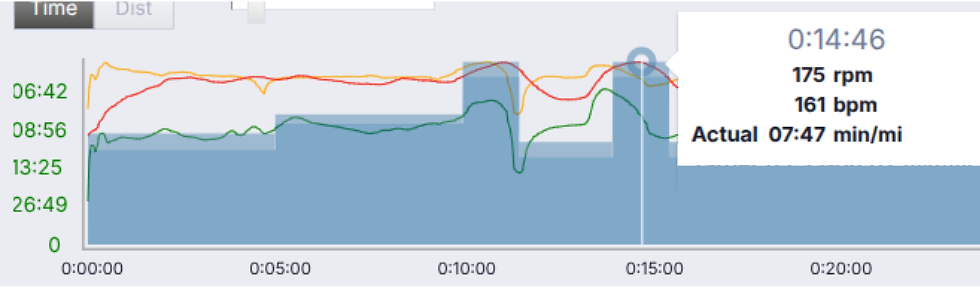
6 × 1-minute hill reps at 175 strides per minute.
That’s over 1,000 strides across the 6× 1 minute intervals and again, lots of muscular work.
Compare that with:
3 sets of 6 Romanian deadlifts at an RPE 8 and controlled tempo.
Here, the posterior chain is typically exposed to forces far beyond what bodyweight uphill running can create. Your body is handling far more force per repetition in the resistance session, even though there are far fewer total reps in the session.
Hopefully you can begin to see the difference in these two forms of training and just why we need progressive strength training to train the strength qualities that running and cycling alone cannot give us.
If you’re sat reading this and thinking that running and cycling are muscular endurance sports so why would you work on other strength qualities, I encourage you to think of your own training- you don’t just run/ride in zone 2, you include threshold intervals, top-end short sprints, strides, progression sessions, fartlek, tempo, vo2 max work and so on… all in the effort to improve your fitness.
On top of this strength training isn’t taking you away from your running and cycling training, it’s complementing and enabling it as when your strength increases with strength training specific for runners and cyclist, your performance and resilience improves with it.
If you increase the amount of force your body can produce, each stride or pedal stroke uses a smaller percentage of it.
Effectively this means:
Less fatigue per stride/revolution.
Improved top end-power and pace.
Better movement mechanics under fatigue, eg late in races.
Improved running economy
Improved cycling efficiency
This is exactly what we repeatedly see when endurance athletes add structured strength training alongside their endurance work.
The improvement comes from neuromuscular and mechanical efficiency, not just aerobic fitness, not a bad return on 30-45 min sessions a couple of times a week!
What this means for your training week
Keep your hill sessions, keep your high-torque low-cadence work on the bike in a periodised fashion, these are valuable sessions...
... but don’t mistake them for strength training.
If you’ve been relying on hills or high-torque, low-cadence intervals as your only form of strength training, this really could be the missing piece in your training.
And if you want help building strength training into your week properly, you can jump into my free community for runners and cyclists over 30 where we discuss strength training regularly, as well as free strength programmes, to help you become the best runner and cyclist that you can be, now and for years to come.
Happy running and riding!
Emma x
Join the Strava club!
3 FREE WAYS TO ELEVATE YOUR RUNNING & CYCLING: |
|


Long done hill reps, made me think this article.